
Only a few substances, such as water, alcohol, and simple sugars, can be absorbed in the intestine without first being broken down into smaller components. Other substances must first be broken down, either chemically or mechanically, to become available to the body. This is called digestion.
After digestion, absorption, and transport through the bloodstream, all the body’s cells can utilize these nutrients, primarily in the form of glucose, amino acids, fatty acids, vitamins, minerals, and water.
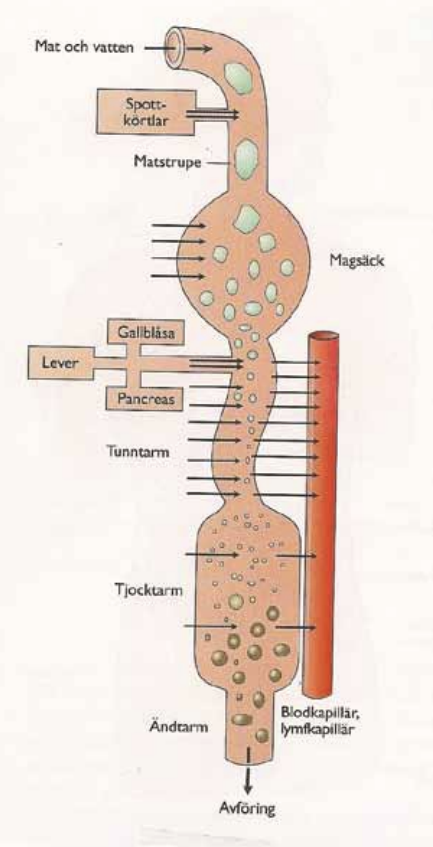
The digestive tract consists of the mouth, esophagus, stomach, small intestine, large intestine, and rectum. It is a tube approximately 5–7 meters long.
The digestive organs also include the liver, gallbladder, and pancreas, which produce important digestive juices necessary for breaking down food and absorbing nutrients.
Feel free to take your own notes.