
The muscles of the leg
M. iliopsoas (hip flexor muscle)
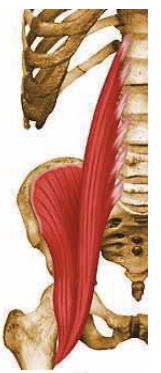
The iliopsoas consists of three muscles: the iliacus, the psoas major, and the psoas minor. However, the psoas minor is of lesser importance and is completely absent in some people. It runs from T12 to L1 and inserts into the fascia of the iliacus muscle.
Origin: M. Iliacus: Inner surface of the ilium. M. Psoas Major: Discs and transverse processes of the spine anteriorly at T12–L5
Insertion (shared by iliacus and psoas major): Lateral aspect of the lesser trochanter of the femur.
Function: Primarily hip flexion. Hip internal and external rotation to a lesser extent (both), spinal flexion (psoas major).
M. Sartorius
Origin: Anterior superior iliac spine (SIAS – point on the anterior surface of the pelvis)
Insertion: Pes anserinus (medial, proximal tibia).
Function: Flexion , abduction, and external rotation of the hip joint; flexion
, and external rotation of the knee
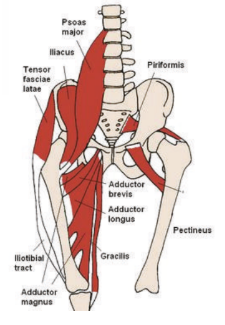
Tensor fasciae latae
Origin: The lateral border of the iliac crest and between the SIAS and SIAI
Insertion: Greatertrochanter and (via the iliotibial tract, see below) the lateral tibial condyle.
Function: Hipflexion and abduction. May also assist in knee flexion due to its attachment to the tibia via the iliotibial tract
Iliotibial tract
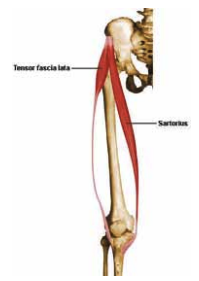
A tendon tract composed of tendon tissue and muscle fibers from the gluteus maximus and tensor fasciae latae.
Origin: Crista iliaca at the iliac crest
Insertion: lateral tibial condyle
Function: Assists the gluteus maximus and tensor fasciae latae
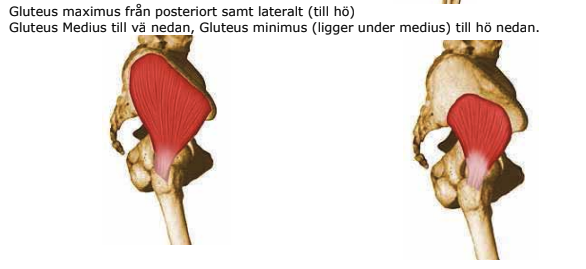
M. Gluteus maximus
Origin: ilium , sacrum, and coccyx
Insertion: tuberosity of the gluteus maximus, iliotibial tract, and linea aspera
Function: primarily hip extension and external rotation. Also adduction and abduction. Control of pelvic position
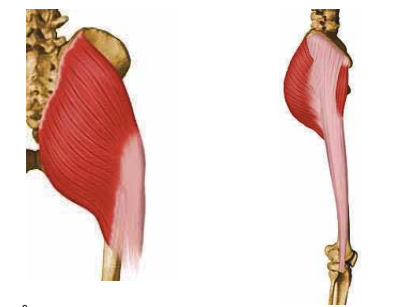
M. Gluteus Medius
Origin: Lateral aspect of the ilium
Insertion : Greatertrochanter
Function: Hipabduction . The posterior portion of the muscle can externally rotate and extend the hip joint, while the anterior portion can internally rotate and flex the hip joint.
M. Gluteus Minimus
Origin: Lateral aspect of the ilium
Insertion: Greatertrochanter
Function: Theanterior portion of the muscle can internally rotate and flex the hip; the posterior portion can externally rotate and extend the hip
M. Piriformis
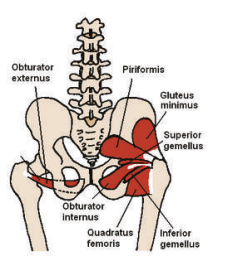
Origin: Anterior sacrum (sacrum), the joint between the sacrum and the ilium
Insertion: Greater trochanter of the femur.
Function: Hip external rotation. Also some hip abduction (during hip flexion)
Thus works in conjunction with, for example, the glutes. The sciatic nerve passes through the piriformis muscle, which can cause so-called “pseudo-sciatica” when the piriformis is tight.