
The endocrine system acts as a regulatory system that secretes chemical signals known as hormones. These hormones circulate through the cardiovascular system and affect distant cells in specific target organs, where they regulate a variety of functions.
Several hormones produced by the hypothalamus and pituitary gland in the brain regulate the secretion of other hormones in other organs. This regulation occurs through a process known as feedback. The hypothalamus is the part of the brain responsible for most functions related to both the endocrine system and the autonomic nervous system.
The hypothalamus is the part of the brain responsible for most functions related to both the endocrine system and the autonomic nervous system. The hypothalamus sends hormonal and neural signals to the pituitary gland, which in turn secretes certain hormones, such as GH, which stands for growth hormone.
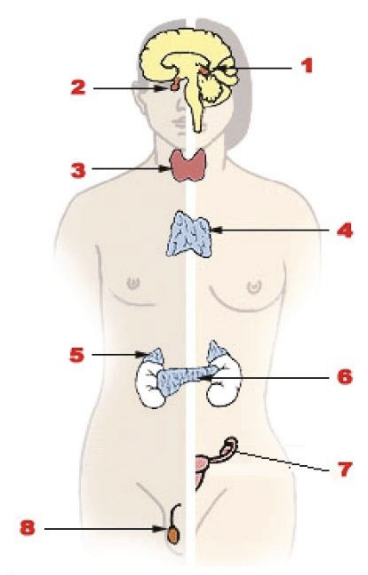
- The pineal gland – regulates the circadian rhythm
- The pituitary gland – affects other endocrine organs
- The Thyroid Gland – Hormones That Affect Metabolism
- Liver – an important part of the immune system
- The adrenal glands – the hormones cortisol and adrenaline
- The pancreas – the hormones insulin and glucagon
- Ovaries
- Testicles